 Image 1 of 7
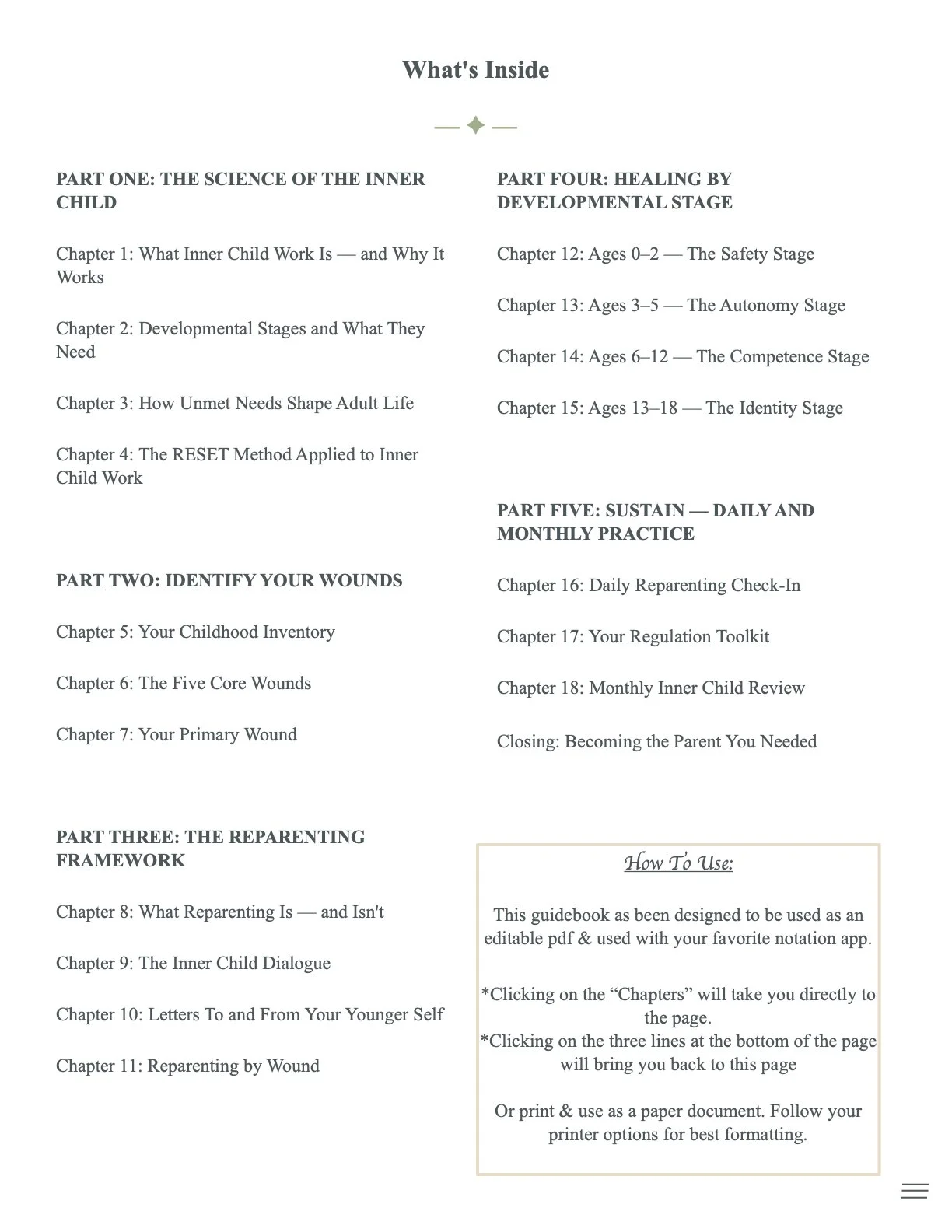 Image 2 of 7
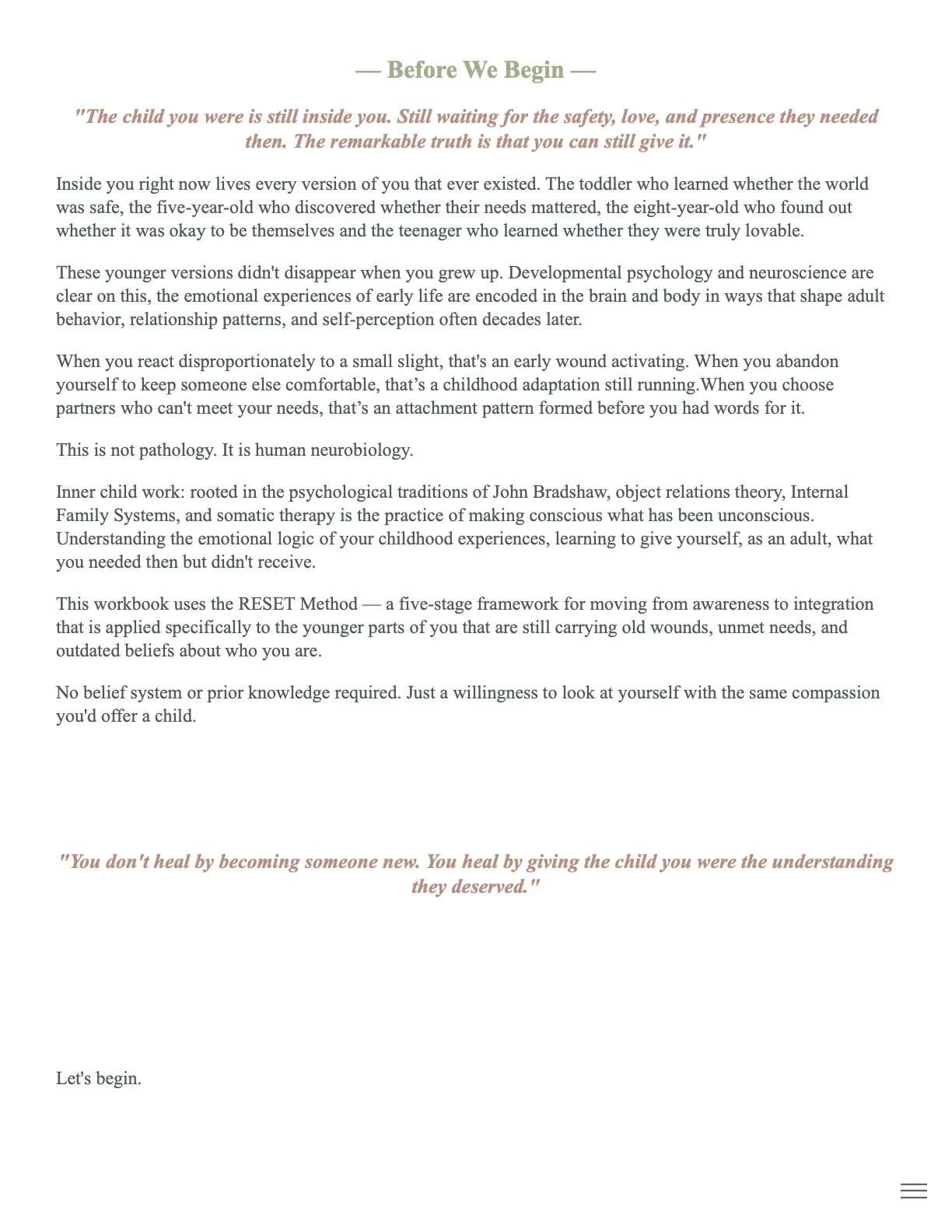 Image 3 of 7
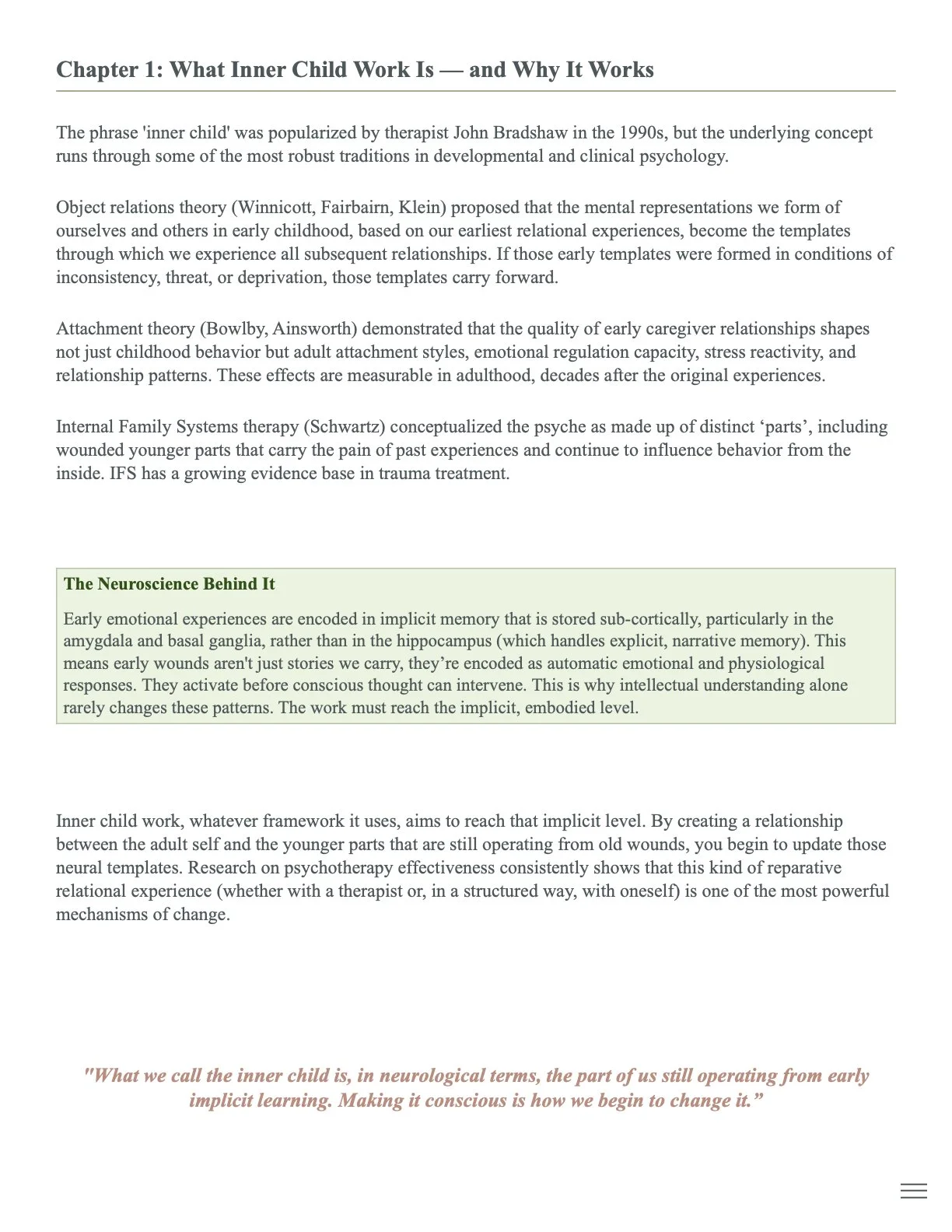 Image 4 of 7
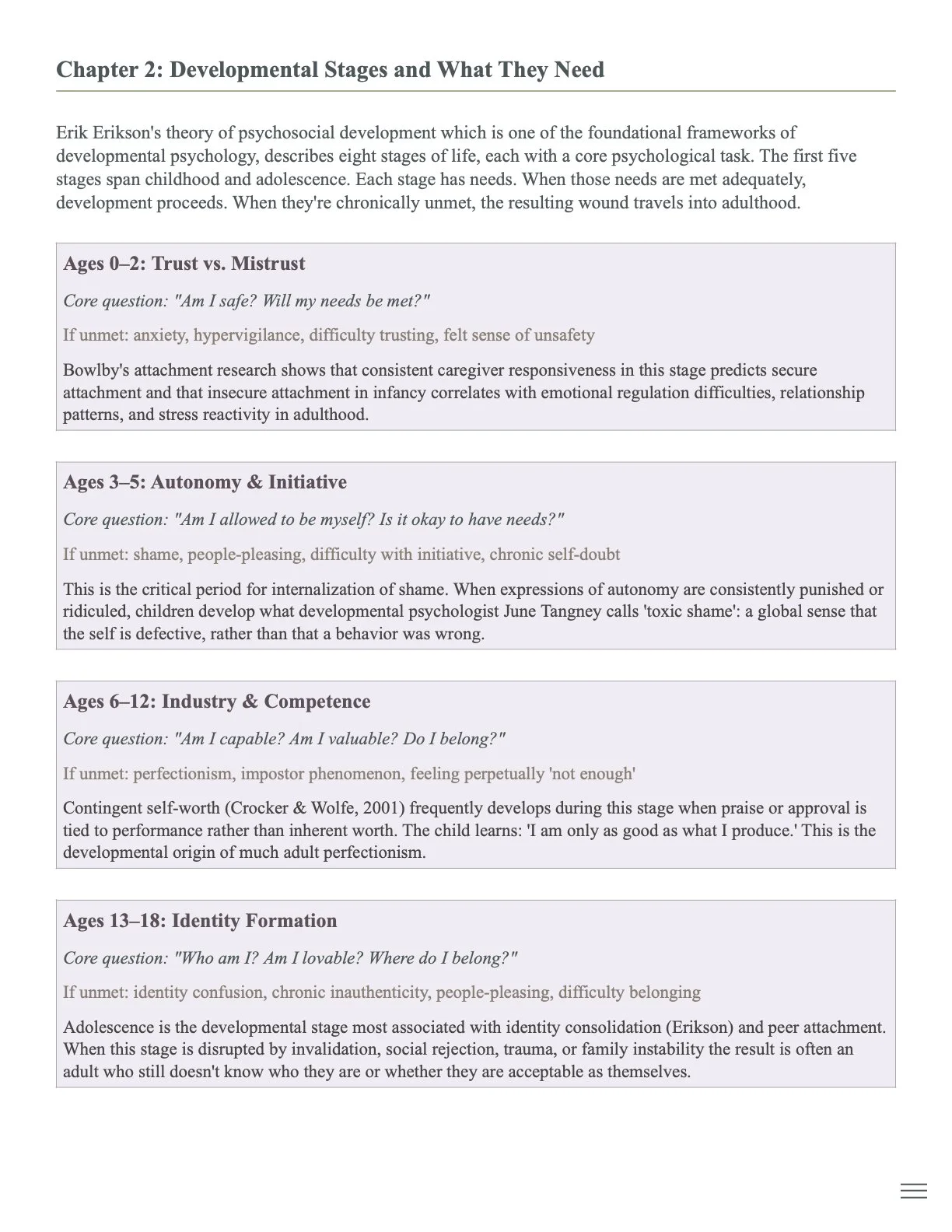 Image 5 of 7
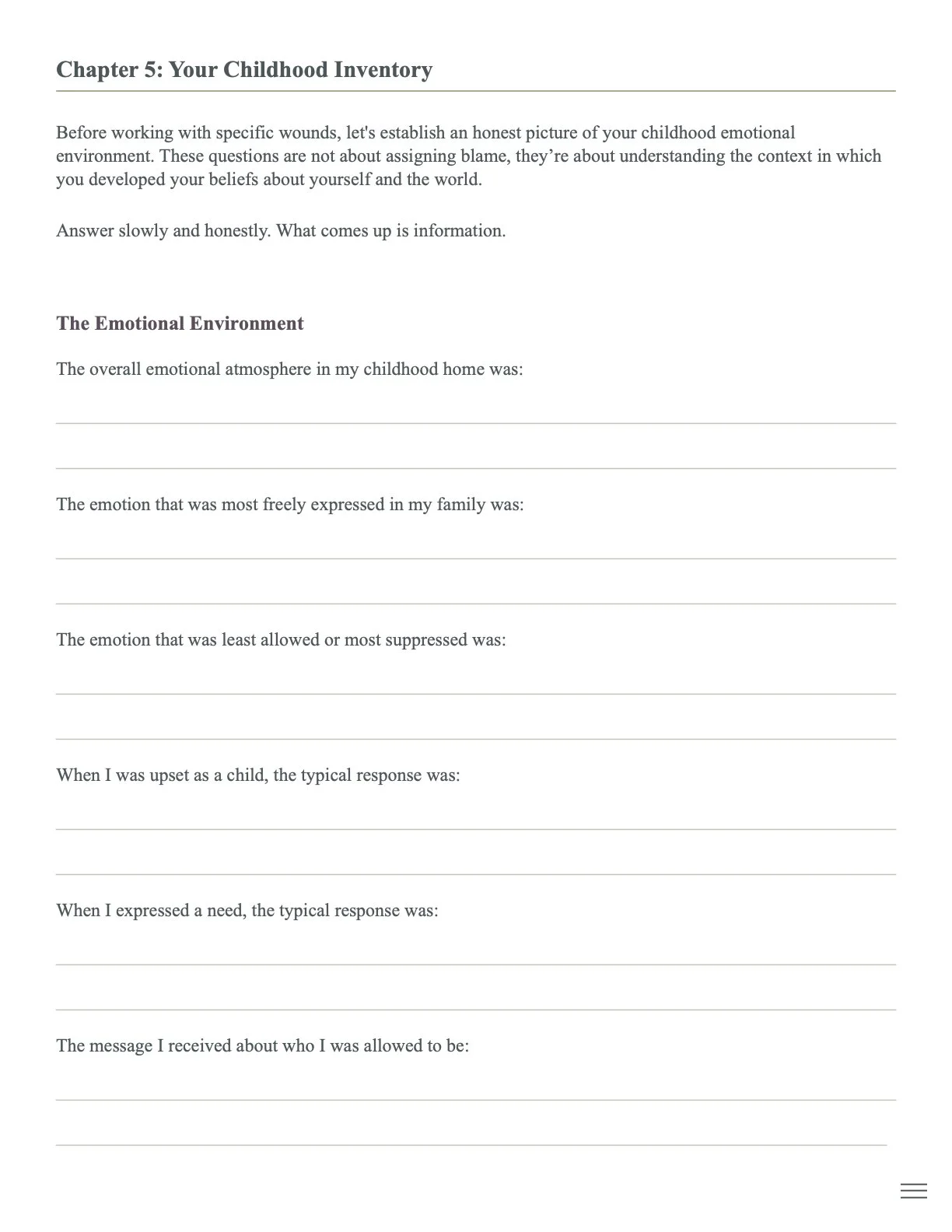 Image 6 of 7
 Image 7 of 7
-
The concept of the inner child, rooted in the psychological traditions of John Bradshaw, Internal Family Systems, object relations theory and somatic therapy and describes the younger parts of the self that still carry the emotional imprints of early experience.
Developmental psychology and neuroscience are clear: the emotional experiences of early life are encoded in the brain and body in ways that shape adult behavior, relationship patterns and self-perception, often decades later. Early wounds aren’t stories we carry, they’re encoded as automatic emotional and physiological responses. They activate before conscious thought can intervene. This is why intellectual understanding alone rarely changes these patterns. The work must reach the implicit, embodied level.
When you react disproportionately to a small slight, that’s an early wound activating. When you abandon yourself to keep someone else comfortable, that’s a childhood adaptation still running. When you choose people who can’t quite meet your needs, that’s an attachment pattern formed before you had words for it.
This workbook helps to bridge that gap. It will make the unconscious visible, and that visibility is the precondition for any real, lasting change.
-
This workbook uses the RESET Method, a five-stage science-informed framework developed to take you from pattern recognition all the way through to embodied integration. No belief system or spiritual background required, just a willingness to look at yourself with the same compassion you’d offer a child.
R - Recognize: Notice the pattern or activation, name what’s happening before anything else
E - Explore: Understand the developmental origin, where it cam from and why it made sense then
S - Shift: Introduce a new response, offering your younger self what they needed but didn’t receive
E - Embody: Sound the shift somatically, because new responses must be practiced in the body not just understood
T - Transform: Notice who you’re becoming, integration is the ongoing accumulation of moments where you chose differently
The RESET Method doesn’t ask you to force a feeling or think your way to freedom, it works with your nervous system not against it, meeting you exactly where you are and walking with you step by step toward integration.
-
You notice patterns in your relationships or reactions that you can’t seem to stop, even when you understand them
You feel disconnected from your emotions or overwhelmed by them and aren’t sure why
You tend to abandon yourself to keep others comfortable
You find yourself choosing people or situations that repeat early dynamics
You carry a quiet sense of not being enough or being too much
You’ve done personal development work but feel like something is still running beneath the surface
You want to understand yourself more deeply without shame, without performance, without pretending
You don’t heal by becoming someone new. You heal by giving the child you were the understanding and love they deserved.”
-
This workbook moves across five parts, from the science of the inner child through to deep integration, the daily practice of reparenting yourself and meeting you where the wounds actually live.
PART ONE: THE SCIENCE OF THE INNER CHILD:Before you can reparent, you need to understand why the past is still living in the present. Part One lays the research-grounded foundation for everything that follows.
Chapter 1: What Inner Child Work Is - and Why It Works - The psychology and neuroscience of why early wounds don’t disappear. They go underground, encoded in the body as automatic responses.
Chapter 2: Developmental Stages and What They Need - Erikson’s five childhood stages, the core psychological task of each, and what becomes possible or wounded when those needs are or are not met.
Chapter 3: How Unmet Needs Shape Adult Life - The five most common wound patters - abandonment, neglect, shame, safety, expression and exactly how they migrate into adult relationships, emotions, and behavior.
Chapter 4: The RESET Method Applied to Inner Child Work - How the five-stage framework works specifically with younger parts, from the first moment of noticing all they way through to embodied transformation.
PART TWO: IDENTIFY YOUR WOUNDS:Honest recognition is the beginning of everything. Part Two offers a structured, compassionate process for understanding exactly what you’re caring and where it came from.
Chapter 5: Your Childhood Inventory - A guided baseline for honestly mapping your early emotional environment, not to assign blame but to understand the context that shaped your beliefs about yourself and the world.
Chapter 6: The Five Core Wounds - Deep exploration of the abandonment wound, the neglect wound, the shame wound, the safety wound and the expression wound, with reflection prompts for each.
Chapter 7: Your Primary Wound - Identifying the wound most active in your life right now. The one most central, most present, most ready to be worked with.
PART THREE: THE REPARENTING FRAMEWORK: Reparenting is not a metaphor, it’s a specific psychological and neurobiological process. Part Three gives you the tools to begin doing it.
Chapter 8: What Reparenting Is and Isn’t - The honest, research-grounded definition of reparenting, including what it can genuinely offer and what it is not as well as the reparenting commitment practice.
Chapter 9: The Inner Child Dialogue - An IFS-informed direct dialogue practice for making contact with your younger self asking what they need, what hurt most, what they need you to promise.
Chapter 10: Letters To and From Your Younger Self - Two structured letter-writing practices that are grounded in Pennebaker’s expressive writing research for creating a reparative relational experience with the younger parts of you.
Chapter 11: Reparenting the Wound - Specific daily, weekly and triggered-state reparenting practices for each of the five core wounds. Meet yourself where the wound actually lives.
PART FOUR: HEALING BY DEVELOPMENTAL STAGE: Different ages need different things. Part Four takes you back to specific developmental stage where a wound formed and offers reparenting practices that match what that younger version of you actually needed.
Chapter 12: Ages 0-2 - The Safety Stage - Working with the nervous systems earlier calibrations toward safety or threat and the body-based practices that can begin to update them.
Chapter 13: Ages 3-5 - The Autonomy Stage - Reclaiming the permission to want things, express preferences and to exist as yourself without shame or apology.
Chapter 14: Ages 6-12 - The Competence Stage - Gently releasing the perfectionism and impostor patterns that form when worth becomes contingent on performance.
Chapter 15: Ages 13-18 - The Identity Stage - Meeting the teenage self who learned to hide, perform or disappear to belong and beginning to reclaim the authentic identity that went underground.
PART FIVE: SUSTAIN - DAILY AND MONTHLY PRACTICE: Reparenting is not a destination, it is a practice that you return to often. Part Five gives you the tools to sustain and track this work over time because progress in this work is invisible day to day and only visible in the longer view.
Chapter 16: Daily Reparenting Check-In - Morning and evening prompts that take less that five minutes. Building the habit of noticing, turning towards yourself and keeping the daily promise of showing up.
Chapter 17: Your Regulation Toolkit - Evidence-based tools for both hyperarousal and hypoarousal so that when the inner work surfaces old material, you have ways to return to the window of tolerance where healing actually happens.
Chapter 18: Monthly Inner Child Review - A return practice for tracking patterns over time, recording what was active, how you responded and what you’re learning about the younger parts of you.
Closing: Becoming the Parent You Needed - A grounding reminder that your inner child doesn’t need you to be perfect, they need you to keep coming back.
-
By the time you reach the closing pages, you will have:
Named the specific wounds running beneath your patterns and understood the developmental context that formed them
Made direct contact with the younger parts of you that are still carrying what they needed and didn’t receive
Identified your primary wound and the reparenting practices that specifically address what the younger self needs
Written letters to and from your younger self, creating a reparative relational experience with the parts of you that have been waiting
Worked through your healing by developmental stage and meeting yourself at the age the wound was formed
Built a daily reparenting practice and regulation toolkit that made turning toward yourself the default, not the exception
Begun to become, for yourself, the consistent, warm, attended presence your younger self always needed
-
Inner Child Healing is designed as an editable PDF - you can type or write directly into the reflection fields on any device, or print and work with pen in hand. There is no right pace. Some chapters will ask for one sitting while others will stay open for weeks.
This workbook can be used on its own as a complete standalone resource or pair it to go even further in depth with the other guides in the RESET Method Collection - Shadow Work, Generational Healing and Manifest Into Alignment, for those that are ready to go further.
The only prerequisite is the willingness to look at yourself with the same compassion you’d offer a child. You already have that, you wouldn’t be here if you didn’t.
“You don’t heal by becoming someone new. You heal by coming home to all of who you already are.”
Inner Child work is not about becoming a better version of yourself, it’s about having access to more of yourself. The parts that went underground, the spontaneity, creativity and capacity for joy that got suppressed alongside the pain. These are the parts that have been waiting patiently for you to come back for them.
This is that invitation.